People ask us all the time which flowers actually grow here.
Fair question. Erie isn't famous for gentle springs. But after multiple seasons of growing cut flowers in Millcreek, we've learned which types of flowers love it by the lake, which ones need a little help, and which ones will humble you the minute you stop paying attention.
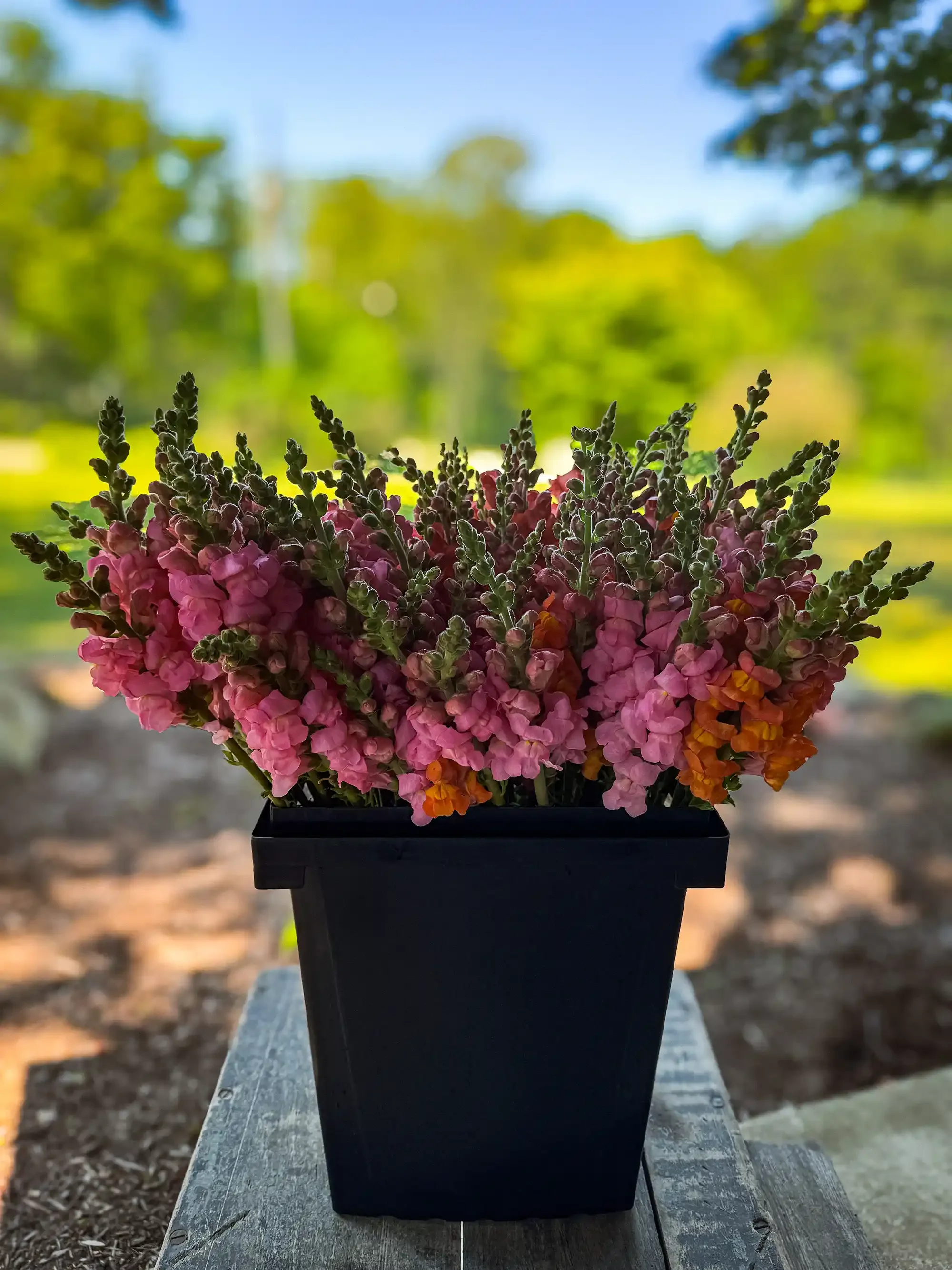
We grow over 40 types of flowers and foliage (multiple varieties of most) on our farm, but here's the short answer. The types of flowers we grow at Bella's Blooms include ranunculus, peonies, snapdragons, rudbeckia, statice, strawflowers, dahlias and lisianthus. Peonies are the only true perennial on that list, though rudbeckia sometimes surprises us and comes back. Everything else gets a head start in our high tunnel, goes in the ground after our May 1 frost date, or gets dug up and stored before the snow flies.
What makes flowers grown in Erie, PA different
Lake Erie runs the show here.
The lake warms up slowly in spring and cools off slowly in fall. That keeps our springs chilly (from February through April, Erie is often 3 to 5 degrees colder than Pittsburgh) and holds off the first fall frost a little longer.
Our average last frost is around May 1, and our first fall frost lands around October 15. That's roughly 167 frost-free days to work with. On the 2023 USDA hardiness map, most Erie neighborhoods fall in Zones 6b and 7a.
Then there's the lake-effect snow, which can top 100 inches in a winter. We'll leave it at that.
If you garden somewhere else, look up your own frost dates and zone, then shift our timing to match. A grower a few hours south will be cutting peonies before we are.
8 types of flowers we grow, season by season
Here they are in the order they bloom for us, starting in the tunnel in May and ending when frost shuts things down in October. Want to see them all in one place? Meet the flowers we grow.
Ranunculus
Ranunculus are the divas of the farm. We say that with love.
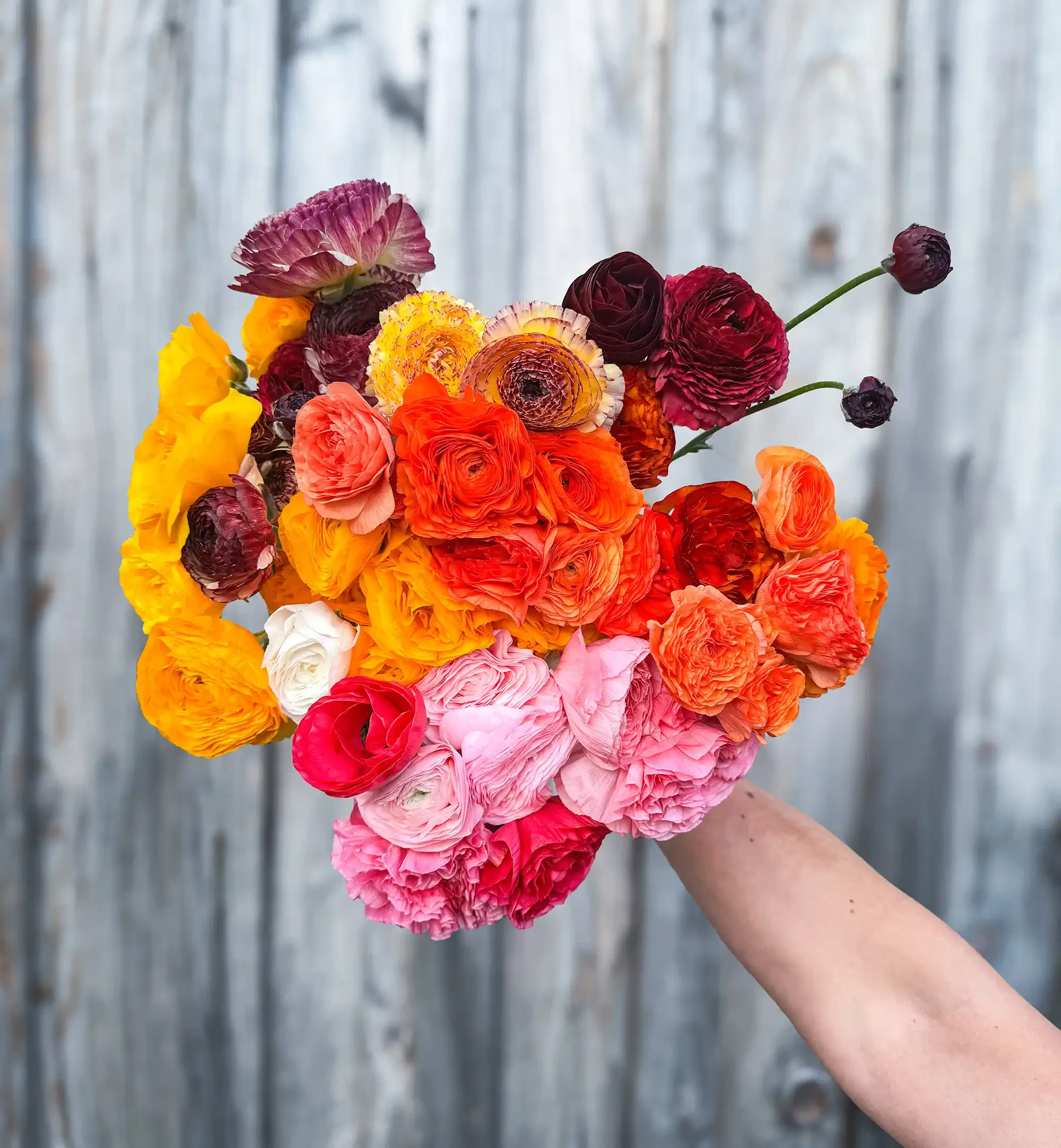
They need about 90 days of moderate temperatures, and an Erie spring swings too hard between frost and sudden heat to give them that outside. So they live in our high tunnel (an unheated, plastic-covered greenhouse). We've planted them in fall and in spring over the years. This fall's corms go in for next season, and we're planning two spring successions after that.
The payoff is layer after layer of paper-thin petals. Our favorites are the Half Clone and Elegance series, and anything salmon colored. I have a type.
Growing tip: Ranunculus aren't winter hardy in Zone 6, so here they need protection if planted in the fall, or a spring planting. Soak the dry corms (the little claw-shaped bulbs) in room-temperature water for 2 to 3 hours before planting so they plump up.
Care tip: Cut them when the buds show color and feel soft when you give them a gentle squeeze, like a marshmallow. They keep opening in the vase and usually last 7 to 10 days.
When we harvest: May and June.
Peonies
If ranunculus are the divas, peonies are the opposite. They come back every June without asking for much.
Peonies need a real winter chill to bloom well. That's why they're so happy in Erie, and why gardeners in warm southern climates often struggle with them.
We love 'Coral Charm' for its glowing coral color, which softens as the flower opens. 'Sarah Bernhardt' is the classic: big, fluffy, fragrant pink blooms you can count on every year. We can't get enough of them, honestly, so we continue to add more and more to our collection.
Growing tip: Plant bare-root peonies in fall with the eyes (the pink buds on the root) only 1 to 2 in (2.5 to 5 cm) below the soil surface. Iowa State Extension notes that burying them deeper can cut down on flowering, and you can end up waiting years for blooms.
Care tip: Peonies get cut at the marshmallow stage too: color showing and soft when squeezed. Expect 5 to 7 days in the vase.
When we harvest: June.
Snapdragons
Snapdragons are easy to grow, as long as you plant the right ones at the right time.
Growers sort snapdragons into Groups 1 through 4 based on how they respond to day length, light and temperature. Groups 1 and 2 are bred for cool weather and short days. Groups 3 and 4 are bred for long, warm summer days. Johnny's Selected Seeds explains the groups if you want the details. Put a cool-season group into summer heat and you get thin, short stems. (More on that below.)
We grow the Chantilly series for early blooms. Their flowers are open-faced and ruffled, without the classic "dragon mouth" that snaps shut. For summer, 'Potomac Deep Orange' is our go-to.
Growing tip: Match the group to the season. Cool-season groups go in early, and summer groups go in once it's warm.
Care tip: Harvest when the bottom third of the flowers on the spike are open. Keep cut stems standing upright, because snapdragon tips bend up toward the light. Lay them flat for a few hours and they'll curve, and they stay curved. Vase life is about 7 to 10 days.
When we harvest: all summer long.
Rudbeckia
Technically, rudbeckia is a black-eyed Susan. It just doesn't look much like the ones along the road, and it adds something special to our bouquets through July and August.
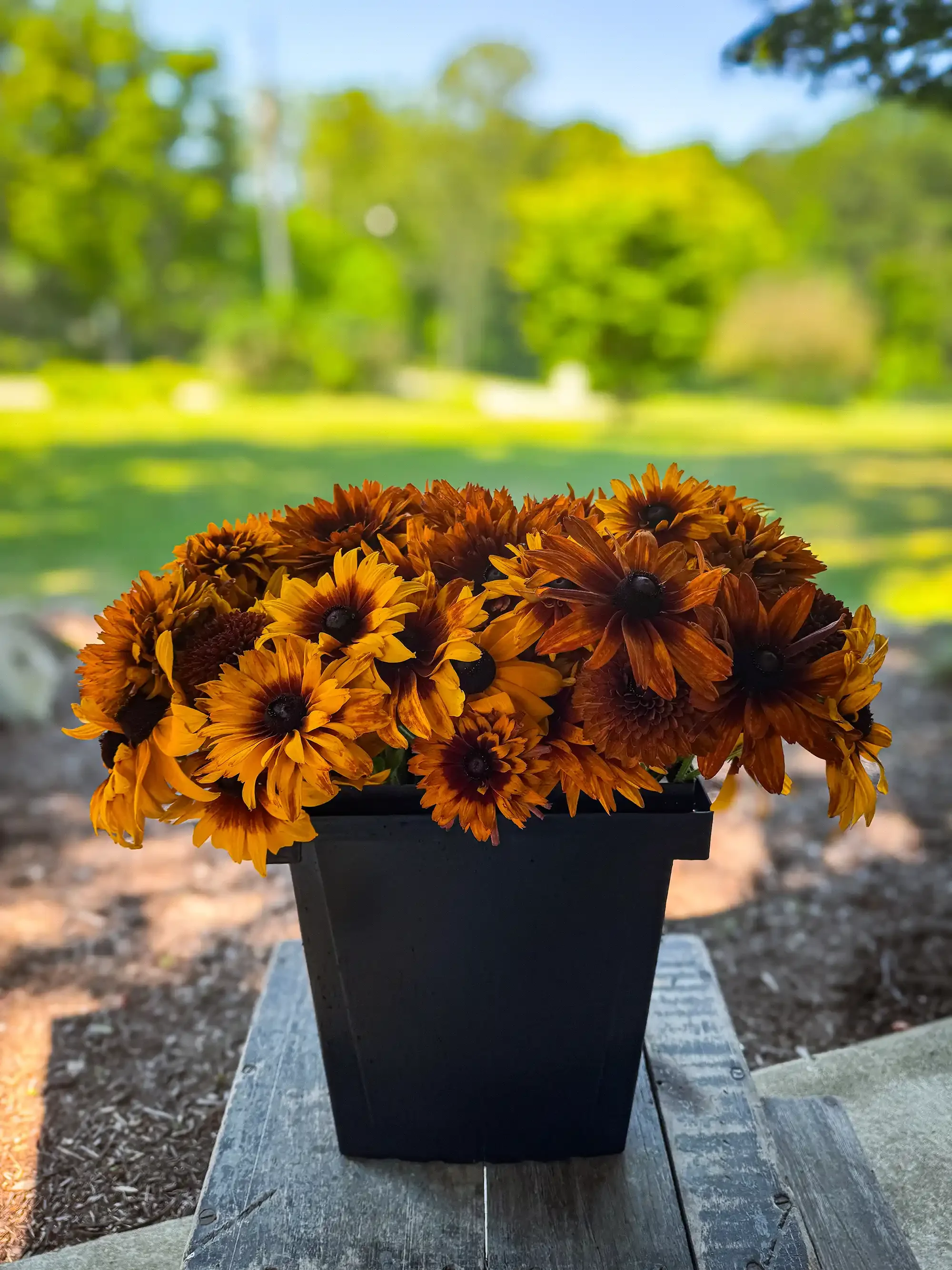
Our favorite by far is the Sahara mix. The blooms are double and semi-double, in soft, vintage shades of copper, caramel, antique rose and pale yellow around a chocolate-brown center.
Growing tip: Rudbeckia needs long days to start blooming, so get it planted in spring and let it settle in before midsummer. It can also come back as a short-lived perennial, so don't be in a hurry to pull it in fall.
Care tip: For fresh bouquets, cut before the blooms are completely open. Expect 7 to 10 days in the vase. The one drawback with Sahara is stem length. The plants top out around 20 to 22 in (50 to 56 cm), so it works best in smaller bouquets and bud vases.
When we harvest: July and August.
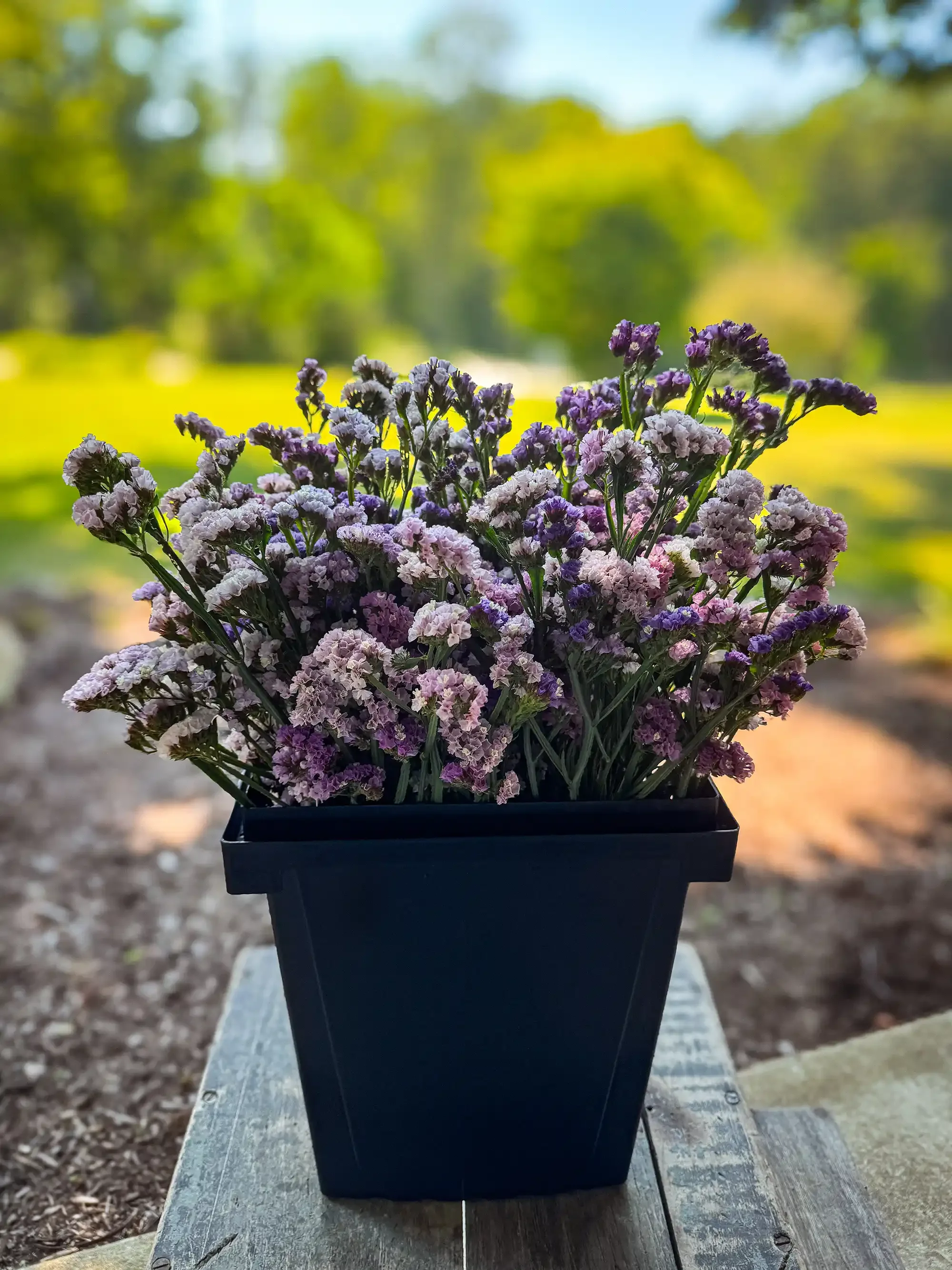
Statice
Statice doesn't get much attention. It's one of the hardest-working flowers on the farm anyway.
The color you see is the papery calyx around a tiny white flower, which is why statice holds its color so long, fresh or dried. We grow the Seeker series in rose and white.
Growing tip: Statice handles cool weather well, which makes it a good one to get planted early.
Care tip: Harvest when most of the clusters on a stem have opened and show color. To dry it, bundle the stems and hang them upside down somewhere dark and dry. Fresh, it lasts a week or two in the vase. Dried, it lasts for months.
When we harvest: all summer long and into fall
Strawflowers
The first time you touch a strawflower, it feels like plastic. It crunches. People always do a double take.
Those stiff, shiny "petals" are bracts, and they make strawflowers one of the best flowers for drying. My favorite is salmon. (It's my favorite shade of most flowers, if you haven't noticed.)
Growing tip: Pinch young plants once, snipping off the growing tip, to get more branching stems.
Care tip: Cut them when the outer petals have opened but the center is still tight. They keep opening as they dry, so a flower picked fully open will look blown out on the shelf. Fresh, they last 7 to 10 days. Dried, they last for months.
When we harvest: all summer long and into fall
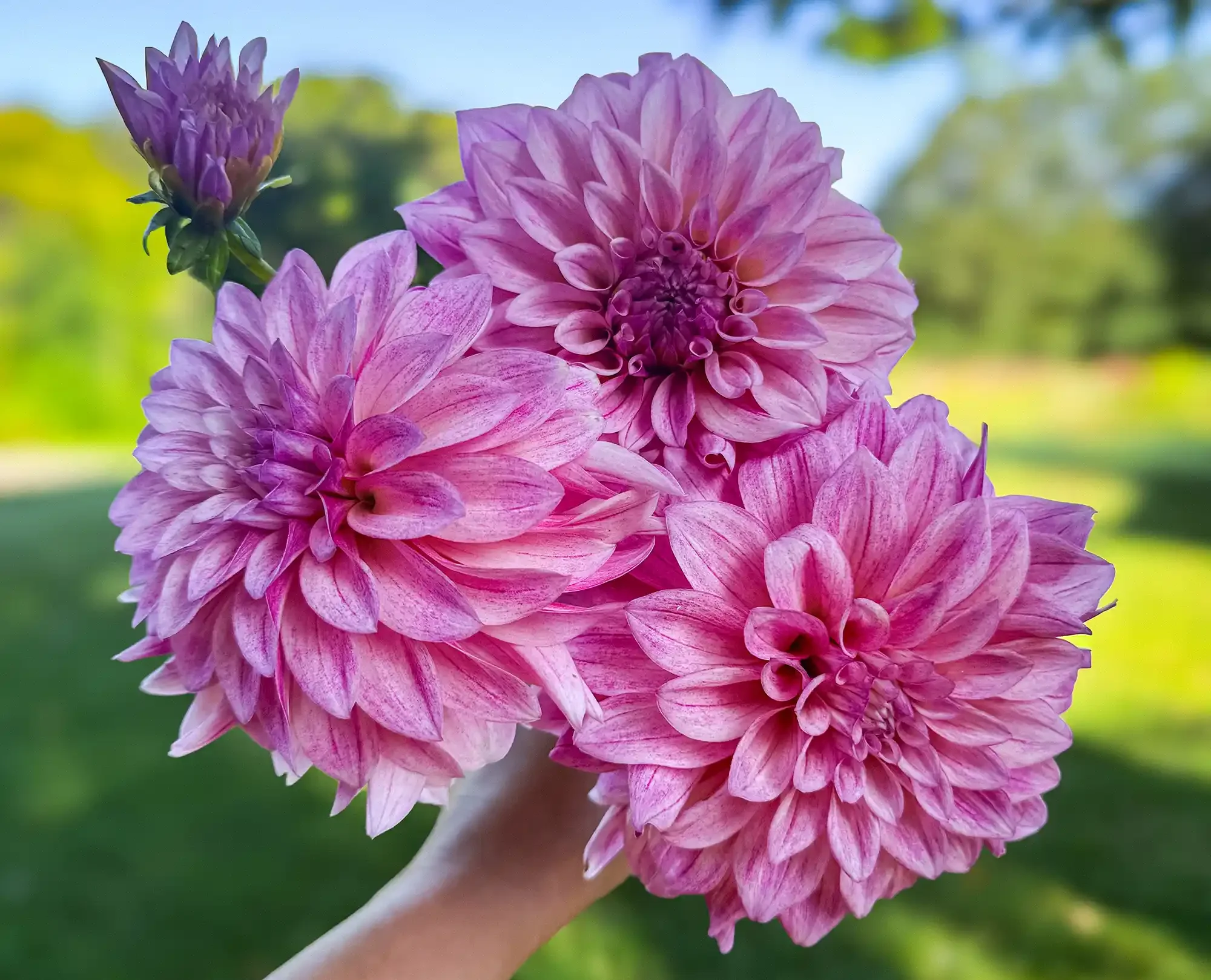
Dahlias
Dahlias are the flower everyone waits for all summer.
We grew roughly 100 varieties this year, so picking favorites is close to impossible. Two that stand out: 'Bloomquist Mojo', a ball dahlia in raspberry pink with tiny gold tips on its petals, and 'Caitlin's Joy', a smaller ball in smoky magenta with coral and apricot tones that shift as the season goes on.
Growing tip: Dahlias can't survive an Erie winter in the ground without lots of extra prep work. After the first frost blackens the plants in October, we dig up every clump, wash it, divide it and store the tubers until spring. It's a lot of work, and it's how one plant turns into several. We're hoping to open a full tuber sale on our website in early 2027, so you can grow some of ours. Join our newsletter to hear when it opens.
Care tip: Dahlias don't open any further after they're cut, so harvest when the blooms are about three-quarters open. Vase life is short, usually 3 to 5 days, so they're a flower to enjoy fresh and local.
When we harvest: August until our first frost in mid-October.
Lisianthus
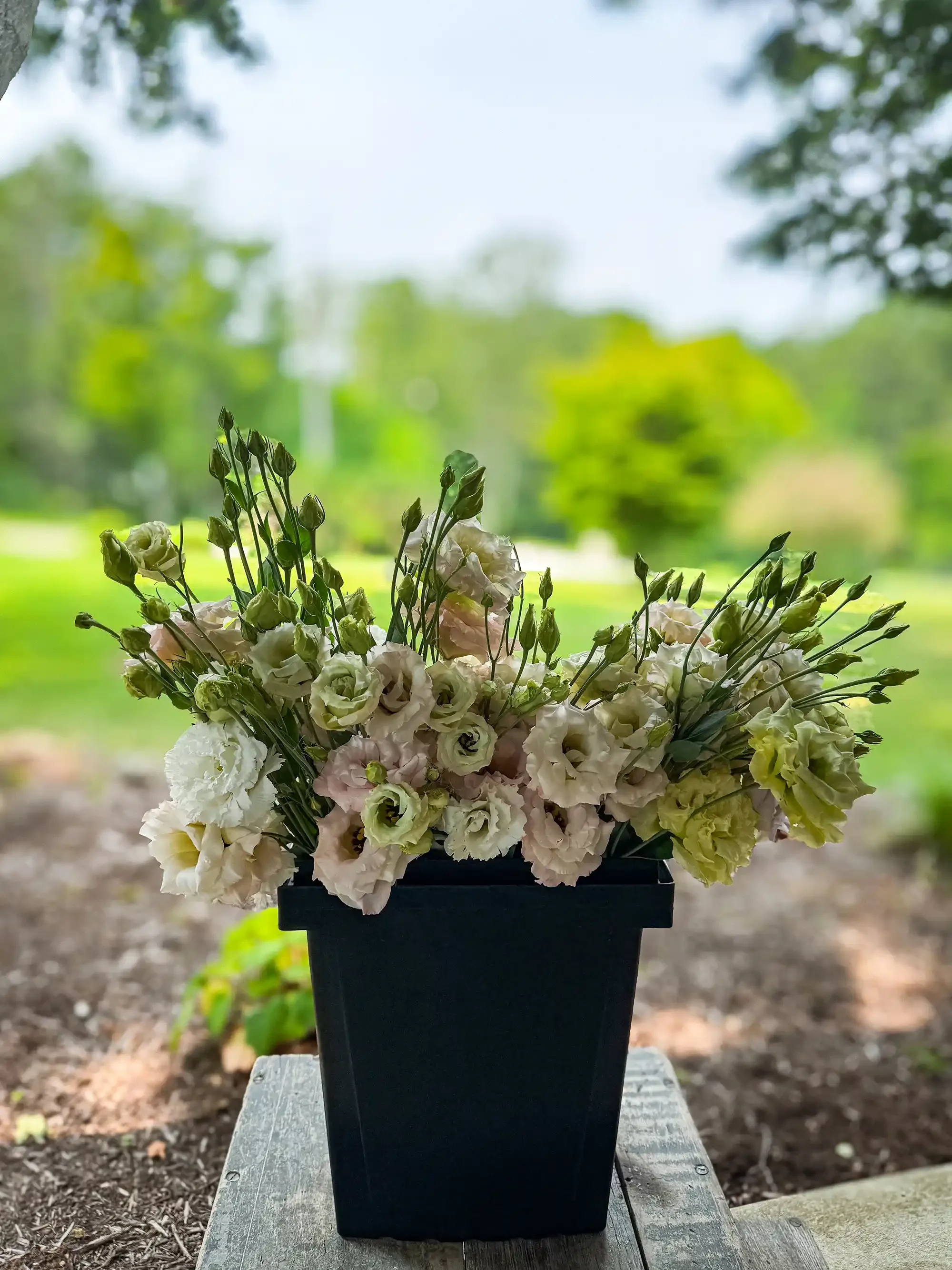
Lisianthus looks like a rose and outlasts one in the vase. The catch is how long it takes to grow.
The seeds are as fine as dust, and the seedlings sit in trays for months before they're big enough to plant out. We've grown them from seed successfully every year. This is still the one crop for which we also buy plugs (young starter plants from a specialty grower), so we're not betting the whole season on our own seedlings.
Our favorites are 'Mariachi Carmine' and the Voyage series, both doubles with ruffled, rose-like petals.
Growing tip: If you're starting from seed, sow about 12 to 13 weeks before you plan to plant out. For a May planting in Erie, that means sowing around the end of January.
Care tip: Cut when one or two flowers on the stem are open, and the rest of the buds will keep opening in the vase. Lisianthus often lasts 10 to 15 days, which is a big reason florists love it for weddings.
When we harvest: August and September
From our field: the snapdragons that topped out at 3 inches
I'll own this one.
We once tried a new variety called Double Frappe, a fluffy double snapdragon. What we didn't catch was that it's a Group 1-2 snapdragon, bred for cool temperatures and short days. We planted it in the dead heat of summer.
It bloomed at about 3 inches tall. Three inches. You can't put that in a bouquet. You can barely put it in a shot glass.
The lesson: check the group number before anything else on the seed packet. It tells you when a snapdragon wants to grow, and it doesn't care how pretty the picture is.
Types of flowers FAQ
How many types of flowers are there?
Botanists count more than 300,000 species of flowering plants. Cut flower farmers work with a much shorter list: the ones with long stems, good vase life and the toughness to handle their climate.
What flowers grow best in Erie, PA?
Peonies are the standout, because they need cold winters. Rudbeckia, snapdragons, statice, strawflowers and dahlias all do well in the field between our May and October frosts. Ranunculus need protection, like a high tunnel, to get through our spring temperature swings.
Which cut flowers last the longest?
Of the flowers we grow, lisianthus lasts longest fresh, often 10 to 15 days. Statice and strawflowers last for months once dried. Dahlias are the shortest, at 3 to 5 days.
When is flower season in Erie, PA?
For us it runs from May, when the first ranunculus come out of the tunnel, to mid-October, when frost ends the dahlias. June brings peonies, July and August bring rudbeckia, statice and strawflowers, and late summer belongs to dahlias and lisianthus.
When should I plant peonies in Erie?
Fall. Plant bare roots with the eyes 1 to 2 inches below the soil so they can settle in before winter. We're planting three new varieties ourselves next week.
The flowers that make it worth it
Every one of these flowers asks for something different. A tunnel. A cold winter. A careful read of the seed packet. A whole lot of digging in October.
We wouldn't trade any of them.
Want the whole season delivered, from the first ranunculus to the last dahlia? Join our flower CSA.